Quality Assurance Software for Laboratory Quality Management
Quality Assurance Software is a cloud-based solution for managing laboratory quality assurance, quality control, testing, inspection, calibration, quality plans, reports and laboratory data in one centralized system. QHSEalert Quality Suite helps organizations digitize quality processes from raw materials and packing materials through in-process products, finished products and dispatch verification. The software supports customized QC plans, test requests, analysis reports, certificates, calibration alerts, quality records, supplier performance analysis and digital report sharing through email, WhatsApp and print. It can also support LIMS and laboratory QC workflows, helping quality teams improve traceability, reduce manual errors and access quality information efficiently.
What Is Quality Assurance Software?
Quality Assurance Software is a digital system designed to standardize, control, document and monitor quality-related activities. In laboratory and manufacturing environments, it can connect quality plans, test requests, inspections, test results, approvals, reports, calibration records and performance analysis within a centralized platform.
Unlike a paper-based or spreadsheet-based process, laboratory QA software provides a structured workflow for creating quality requirements, recording results, reviewing information and retrieving historical records.
QHSEalert Quality Suite combines quality assurance, quality control and laboratory information management workflows so organizations can manage quality data from incoming materials through production, finished products and dispatch.
QA Software and QC Software
Quality Assurance Software focuses on establishing and managing processes, procedures, requirements and controls that help ensure consistent quality.
Quality Control Software focuses on testing, inspection, measurement, verification and recording of actual quality results.
An integrated QA and QC software system allows organizations to connect quality requirements with testing and verification activities.
What Is LIMS Software?
LIMS stands for Laboratory Information Management System. LIMS software helps laboratories organize laboratory information, samples, test-related data, workflows, records and reports.
Laboratory QA and QC software can work together with LIMS-related processes to provide structured management of laboratory quality information, testing activities and quality records.
Quality Control Plans and Testing Management
Quality Control Plans provide a structured method for defining what needs to be tested, how it should be tested and what specifications must be achieved.
QHSEalert Quality Suite enables organizations to create and manage customized quality control requirements according to products, materials, processes, customers and applicable specifications.
Test Request Management
Test requests can be generated according to defined quality requirements and testing workflows.
The system can support both manual and automatic test requests, helping quality teams organize testing activities and reduce dependence on manual communication.
Test Result Recording
Quality personnel can record test results against the applicable test request, product, material or quality plan.
Digital result recording improves accessibility and traceability of laboratory and quality information.
Result Review and Approval
Test results can be reviewed and approved according to defined responsibilities and workflows.
This provides better control over quality decisions and helps ensure that quality reports are generated from reviewed information.
Approved, Rejected and Deviation Status
Quality results can be categorized according to their final status.
Typical quality statuses include:
- Approved
- Rejected
- Accepted under deviation
This provides clear visibility of the final quality decision.
Customized Quality Control Plans
Quality control plans can be configured according to:
- Product or material
- Grade or specification
- Customer requirements
- Test parameters
- Test methods
- Sampling requirements
- Number of tests
- Testing frequency
- Acceptance criteria
This allows quality teams to maintain different quality requirements for different products, materials and processes.
Quality Assurance and Quality Control Software for the Complete Quality Cycle

QHSEalert Quality Suite supports a structured quality workflow covering incoming materials, production processes, finished products and dispatch activities. This approach helps quality teams maintain consistency, traceability and visibility throughout the quality control process.
Quality Plan → Test Request → Testing → Result Entry → Review → Approval → Quality Report → Analysis
🧪 Raw Material Quality Control
Raw materials can be managed through customized quality requirements, specifications, test parameters, sampling requirements and applicable test methods.
Quality teams can record test results and determine whether incoming materials meet defined quality requirements before they are accepted for further processing.
📦 Packing Material Quality Control
Packing materials can be managed according to defined specifications, inspection requirements and testing criteria.
Customized quality plans can be established according to material type, specification, customer requirement and applicable testing procedures.
⚙️ In-Process Quality Control
In-process quality control helps organizations monitor quality during manufacturing and processing activities.
The software can support defined testing requirements and automatic test requests for continuous production processes, helping quality teams perform required tests at the appropriate stages of production.
🏭 Finished Product Quality Control
Finished product quality control helps verify that manufactured products meet defined specifications and quality requirements before release.
Quality teams can manage product-specific testing, sampling, specifications, results, approvals and final quality status.
🚚 Dispatch and Delivery Quality Verification
Quality requirements can also be applied to dispatch and delivery activities.
Organizations can manage customer-specific quality requirements, testing information, verification activities and associated quality documentation before products are dispatched.
Features of Quality Assurance Software
🤖 Automated and Manual Test Requests
The software supports automated and manual test request workflows according to the organization’s quality control requirements. Automatic requests can be useful for continuous production processes, while manual requests can be generated for specific inspections, samples or testing requirements.
⚙️ Customized Quality Requirements
Quality requirements can be configured according to the organization’s products, materials, processes, specifications and customer requirements. This allows organizations to manage different quality standards and testing requirements within the same system.
📋 Quality Specifications and Test Methods
Quality teams can define specifications and applicable test methods for different products and materials. This provides a consistent reference for laboratory testing and quality verification.
🧪 Calibration Management and Alerts
Calibration management helps organizations maintain information about laboratory and testing equipment. The system can support equipment mapping, calibration frequency, responsible users and calibration due-date monitoring. Calibration alerts help responsible personnel identify upcoming calibration requirements and take timely action.
🚨 Escalation Notifications
Escalation notifications can help bring attention to pending activities that require action. This can support timely completion of quality, testing and calibration-related activities.
🔔 Customized Notifications
Organizations can configure notifications for relevant quality activities, including test requests, quality reports and actions requiring attention. Notifications help quality personnel remain informed about important workflow events.
🔍 Search and Retrieve Quality Records
Digital quality records can be searched and retrieved more efficiently than paper-based records. Quality teams can access historical testing information, reports, calibration records and other quality information when required.
📊 Excel, PDF and Print Export
Quality information and reports can be made available in commonly used formats such as PDF and Excel, with printing functionality for organizations that require physical records.
📤 Email and WhatsApp Report Sharing
Quality reports and certificates can be shared digitally through supported communication channels, including email and WhatsApp. This can help quality teams communicate test results and quality documentation quickly with relevant personnel and customers.
📱 Mobile Access
Mobile access allows authorized users to access relevant quality information and perform supported activities using mobile devices. This can help quality personnel work with quality information beyond a fixed desktop environment.
📁 Reference Document Management
Quality teams can maintain reference documents associated with laboratory and quality activities.
Documents may include:
- Standard Operating Procedures
- Test methods
- Inspection procedures
- Operating manuals
- MSDS documents
- Quality reference documents
Benefits of Laboratory Quality Assurance Software
⚙️ Reduce Manual Errors
Digital workflows can reduce dependence on manual paperwork and repeated data entry. Structured quality plans, test requests, result recording and approval workflows help standardize quality activities.
🔍 Faster Retrieval of Quality Records
Digital records can be searched and retrieved when required. Quality teams can access historical reports, test results, calibration information and other records without searching through physical files.
📄 Paperless Quality Management
Quality processes can be managed digitally through test requests, result recording, approvals, reports, calibration records and electronic document management. This can reduce dependence on paper-based quality records.
⚡ Faster Quality Reporting
Digital workflows can reduce the time required to prepare quality reports after testing and approval. Reports can be generated and shared electronically with relevant users.
🔗 Improved Quality Traceability
Digital records create a structured connection between quality plans, test requests, test results, approvals and reports. This improves the ability to trace quality information throughout the quality process.
📋 Better Quality Record Management
Centralized quality records provide a structured way to manage testing information, quality reports, calibration records and reference documents. This can improve accessibility and traceability of quality information.
📊 Real-Time Quality Performance Monitoring
Quality teams can monitor relevant quality performance information and analyze historical data. Performance information can be used to identify trends, recurring issues and areas requiring improvement.
🧪 Better Calibration Management
Calibration alerts and due-date monitoring help quality teams identify upcoming calibration requirements. This supports timely calibration of laboratory and testing equipment.
💡 Better Quality Decision-Making
Access to organized historical quality information helps quality teams analyze results and make decisions based on available quality data.
🔄 Support Continuous Improvement
Historical quality data can help organizations identify recurring quality issues, performance trends and opportunities for improvement.
Quality Data Analysis and Performance Monitoring
Supplier Quality Performance
Supplier-related quality information can be reviewed to understand quality performance over selected periods. This can help organizations identify recurring supplier quality issues and monitor supplier performance.
Production Quality Performance
Production quality information can be analyzed to identify trends, recurring issues and areas requiring attention. This supports better visibility of quality performance within manufacturing processes.
Delivery Performance
Organizations can monitor relevant delivery and quality information to identify performance trends and recurring issues.
Quality Team Performance
Quality-related activities and records can provide management with better visibility of quality team performance and workload.
Historical Quality Data
Historical quality records can be searched and analyzed to understand past results, recurring problems and quality trends.
Laboratory Calibration Management
Equipment Mapping
Laboratory and testing equipment can be mapped within the quality management workflow. This provides a centralized record of equipment associated with quality activities.
Calibration Frequency
Calibration requirements can be maintained according to the applicable frequency for individual equipment or instruments.
Calibration Due-Date Alerts
Calibration due-date alerts help responsible personnel identify upcoming calibration requirements. Timely alerts can reduce the risk of missing scheduled calibration activities.
Responsible User Mapping
Responsible users can be associated with calibration activities so that relevant personnel receive information about upcoming requirements.
Calibration Record Management
Calibration-related information can be maintained digitally for easier retrieval and monitoring.
Escalation for Overdue Calibration
Escalation notifications can help management and responsible personnel identify calibration activities that remain pending or overdue.
Quality Reports and Certificates
🔍 Inspection Reports
Inspection information can be documented and maintained as part of the quality record.
📜 Certificate of Analysis
Organizations can generate and manage quality documentation containing relevant product or material testing information where applicable.
📋 Test Certificates
Test certificates can provide documented information about testing and quality verification performed on materials or products.
💻 Digital Quality Reports
Digital reports help quality teams distribute quality information without depending entirely on physical documents.
📤 Report Sharing Through Email and WhatsApp
Quality reports can be shared electronically through supported communication channels, helping users communicate results efficiently.
📄 PDF, Excel and Print Reports
Quality information can be made available through PDF, Excel and print formats according to organizational requirements.
Quality Assurance Software for Different Industries

- ✔ Pharmaceutical Industry
- ✔ Chemical Industry
- ✔ Petrochemical & Refinery Industry
- ✔ Food & Beverage Industry
- ✔ Cement & Construction Materials Industry
- ✔ Textile & Dyeing Industry
- ✔ Paints & Coatings Industry
- ✔ Fertilizer & Agrochemical Industry
- ✔ Cosmetics & Personal Care Industry
- ✔ Metal & Steel Industry
- ✔ Ceramic & Glass Industry
- ✔ Automotive & Engineering Industry
LIMS, QA and QC Software – How They Work Together
🧪 LIMS Software
LIMS, or Laboratory Information Management System, focuses on managing laboratory information, laboratory workflows, records and related data.
🔬 Quality Control Software
Quality Control Software focuses on testing, inspection, measurement, verification and recording of actual quality results.
🛡️ Quality Assurance Software
Quality Assurance Software focuses on quality processes, requirements, procedures, controls and records that support consistent quality.
🔗 QHSE Quality Suite – Integrated Laboratory Quality
An integrated quality workflow can connect:
Quality Plan → Test Request → Sample/Testing → Result → Review → Approval → Report → Quality Analysis
Connecting these activities provides quality teams with better visibility and traceability throughout the quality process.
QA Software vs QC Software vs LIMS
| System | Primary Purpose | Typical Activities |
|---|---|---|
| QA Software | Quality assurance | Quality processes, requirements, procedures, controls and records |
| QC Software | Quality control | Testing, inspection, measurement, verification and results |
| LIMS | Laboratory information management | Laboratory information, workflows, records and reporting |
| QHSEalert Quality Suite | Integrated quality management | Quality plans, test requests, results, reports, calibration and quality performance |
Quality Assurance Software Implementation and Support
⚙️ Application Setup
The application can be configured according to the organization’s quality management requirements and applicable workflows.
🛠️ Quality Control Plan Customization
Quality control plans can be configured according to products, materials, specifications, testing requirements and organizational processes.
🧪 Calibration Configuration
Calibration requirements can be configured according to equipment, frequency, responsible personnel and applicable monitoring requirements.
👥 User Mapping and Access
Users can be mapped according to their responsibilities and quality workflow requirements.
🎓 User Training
Training helps quality personnel understand the relevant software functions and digital quality workflows.
📖 User Manual
User documentation can support users in understanding system functions and completing relevant quality activities.
🎥 Video Tutorials
Video tutorials can provide additional support for users learning the software and its workflows.
🔧 Troubleshooting and Support
Technical and application-related support can help users resolve issues encountered during software usage.
🤝 Post-Implementation Support
Ongoing support helps organizations continue using the software effectively after implementation.
Why Use QHSEalert Quality Assurance Software?
QHSEalert Quality Suite brings laboratory quality assurance and quality control activities into a centralized digital platform.
Instead of managing quality plans, test requests, results, reports, calibration records and performance information through disconnected paper records and spreadsheets, quality teams can manage these activities through structured digital workflows.
☁️ Cloud-Based Quality Management
Cloud-based access can provide authorized users with convenient access to quality information according to the configured system and user permissions.
⚙️ Customized Quality Workflows
Quality workflows can be configured according to organizational requirements, products, materials, testing processes and quality control plans.
📋 Centralized Quality Records
Quality plans, test information, reports, calibration records and related documents can be maintained in a centralized system.
📊 Digital Quality Reporting
Quality reports and certificates can be generated and shared digitally through supported formats and communication channels.
📈 Quality Performance Visibility
Organized quality data provides management and quality teams with greater visibility of quality performance and historical trends.
🔬 Laboratory and Manufacturing Quality Support
The software can support quality processes across laboratory activities and manufacturing quality control workflows.
🤝 Implementation and Post-Live Support
Configuration, training, documentation and ongoing support help organizations adopt digital quality management processes.
Quality Assurance Software FAQs
What is Quality Assurance Software?
- Quality Assurance Software is a digital system used to manage and standardize quality processes, requirements, records and workflows. It can help organizations manage quality plans, testing, inspections, approvals, reports, calibration and quality performance from a centralized platform.
What is Quality Control Software?
- Quality Control Software is used to manage activities related to testing, inspection, measurement, verification and recording of quality results. It helps quality teams manage test requests, specifications, results, approvals and quality reports.
What is the difference between QA and QC software?
- QA software focuses primarily on quality processes, requirements and controls, while QC software focuses on testing, inspection and verification of actual quality results. An integrated system can connect both activities so organizations can manage quality requirements and testing within one workflow.
What is Laboratory Quality Assurance Software?
- Laboratory Quality Assurance Software is designed to manage quality-related activities within laboratories and testing environments. It can include quality plans, testing, results, approvals, reports, calibration, reference documents and quality records.
Is Quality Assurance Software the same as LIMS?
- Quality Assurance Software and LIMS have related but different purposes. LIMS primarily manages laboratory information, workflows and records, while QA software focuses on quality assurance processes and controls. Depending on the solution, these functions can be integrated into a broader laboratory quality management workflow.
What is LIMS QC Software?
- LIMS QC Software refers to software that supports laboratory information management together with quality control activities such as test requests, testing, result recording, review, approval and reporting.
What quality processes can QHSEalert Quality Suite manage?
- QHSEalert Quality Suite can support quality plans, raw material testing, packing material testing, in-process quality control, finished product testing, dispatch verification, test requests, test results, reports, calibration and quality performance monitoring.
Can quality control plans be customized?
- Yes. Quality control plans can be configured according to products, materials, grades, specifications, customers, test parameters, test methods, sampling requirements and testing frequencies.
Can the software manage raw material testing?
- Yes. Raw material quality requirements, specifications, test parameters, sampling requirements and test results can be managed through structured quality control workflows.
Can it manage in-process quality testing?
- Yes. The software can support in-process quality testing according to defined quality requirements. Automatic test requests can also support continuous production processes where applicable.
Can it manage finished product testing?
- Yes. Finished product testing can be managed through defined specifications, quality plans, test requests, results, reviews, approvals and quality reports.
Can the software manage laboratory calibration?
- Yes. Calibration management can include equipment mapping, calibration frequency, responsible users, due-date monitoring and calibration alerts.
Can quality reports be shared through WhatsApp?
- Supported quality reports can be shared electronically through WhatsApp and other available communication channels, helping quality teams communicate test results and quality documentation efficiently.
Can quality records be exported to Excel or PDF?
- Quality information and reports can be made available through supported formats such as Excel and PDF, along with printing functionality where required.
Can users access the software from mobile devices?
- QHSEalert supports mobile access for supported quality management activities, allowing authorized users to work with relevant quality information through mobile devices.
Can user permissions be configured?
- User access can be mapped according to responsibilities and workflow requirements so that relevant personnel can perform their assigned quality activities.
Does QHSEalert provide implementation and training?
- Yes. Implementation support can include application setup, quality control plan configuration, calibration configuration, user mapping, user training, documentation, video tutorials, troubleshooting and post-implementation support.
Can the software be customized according to our quality process?
- Quality workflows and quality control requirements can be configured according to the organization’s products, materials, processes, specifications and testing requirements.
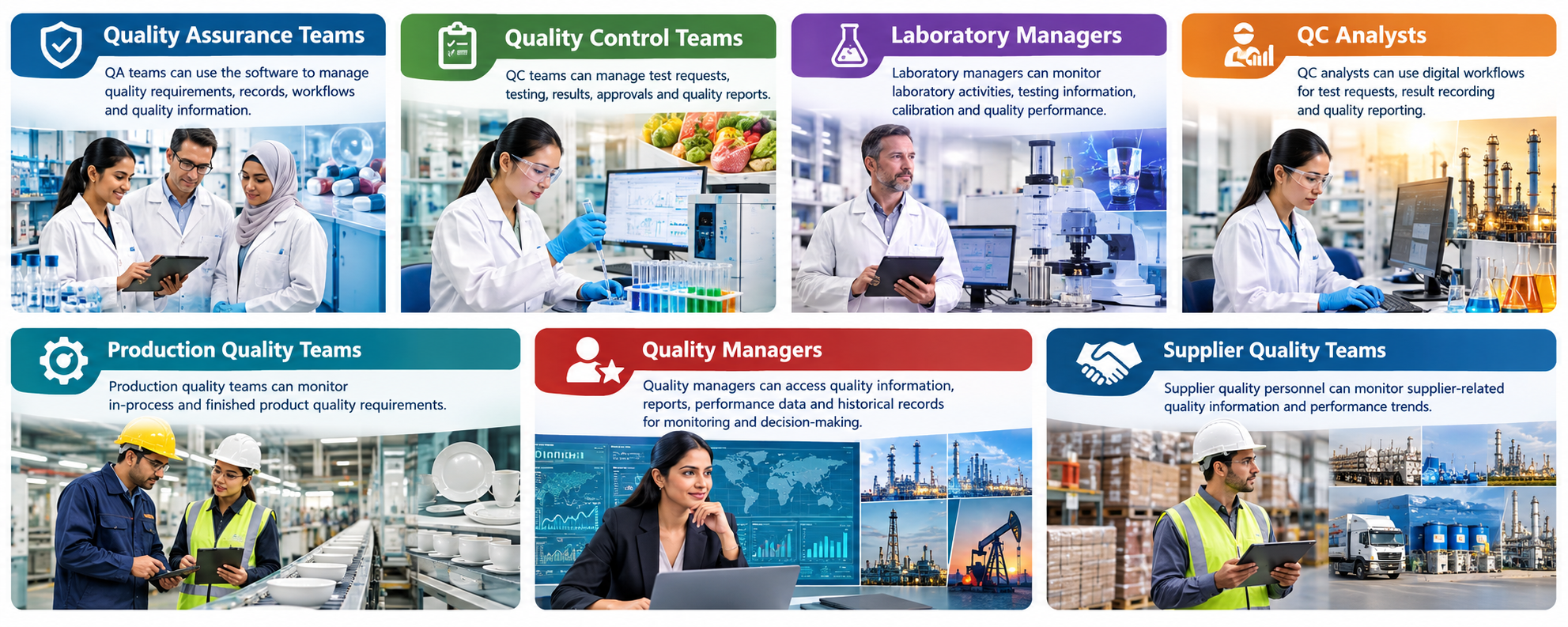
Who Can Use Quality Assurance Software?
- ✔ Quality Assurance Teams
- ✔ Quality Control Teams
- ✔ Laboratory Managers
- ✔ QC Analysts
- ✔ Production Quality Teams
- ✔ Quality Managers
- ✔ Supplier Quality Teams
- ✔ Manufacturing Organizations