Safety Permit to Work (PTW) Software for Digital Permit Management
Safety Permit to Work (PTW) Software by QHSEAlert is a comprehensive digital solution that helps organizations create, manage, approve, monitor, and close work permits efficiently. Our Permit to Work Software replaces paper-based permit systems with a secure electronic workflow, improving workplace safety, regulatory compliance, and operational efficiency. Designed for industries such as oil & gas, construction, manufacturing, chemical, mining, and utilities, this Digital Permit to Work (ePTW) Software supports Hot Work, Confined Space Entry, Electrical Work, Lockout Tagout (LOTO), Excavation, Work at Height, and other critical safety permits through configurable approval workflows, real-time dashboards, mobile accessibility, and complete audit trails.
✔ Digitize all safety permits with configurable workflows
✔ Reduce permit processing time and paperwork
✔ Improve compliance with complete audit trails
✔ Enable mobile permit approvals anytime, anywhere
✔ Monitor permit status in real time with dashboards
✔ Strengthen workplace safety and operational control
What is Safety Permit to Work (PTW) Software?
Safety Permit to Work (PTW) Software is a digital permit management solution that enables organizations to create, approve, issue, monitor, extend, suspend, and close safety work permits through a secure electronic workflow. Unlike traditional paper-based permit systems, Permit to Work Software digitizes the entire permit lifecycle, helping organizations improve workplace safety, strengthen regulatory compliance, reduce manual paperwork, and increase operational efficiency.
A Digital Permit to Work (ePTW) Software system ensures that every permit follows a standardized approval process before hazardous work begins. It verifies that potential risks have been identified, necessary control measures are in place, required personal protective equipment (PPE) has been specified, and all responsible personnel have approved the work. This structured workflow minimizes human error and helps prevent incidents caused by unauthorized or uncontrolled work activities.
Modern Safety Permit Software supports a wide range of permit types, including Hot Work Permits, Confined Space Entry Permits, Electrical Work Permits, Lockout Tagout (LOTO) Permits, Excavation Permits, Work at Height Permits, Cold Work Permits, Lifting Permits, and other specialized permits. It also integrates with risk assessments, Job Safety Analysis (JSA), isolation management, contractor management, and inspection processes to provide complete visibility and control over high-risk work.
QHSEAlert Safety Permit to Work Software provides organizations with configurable digital workflows, multi-level approval processes, mobile access, real-time dashboards, automated notifications, digital signatures, and comprehensive audit trails. Whether deployed in oil & gas, construction, manufacturing, chemical, mining, power generation, utilities, or infrastructure projects, the software helps improve safety performance, accelerate permit approvals, enhance accountability, and ensure compliance with company procedures and international safety standards such as ISO 45001.
What Are Challenges with Paper-Based Permit Systems?
Traditional paper-based Permit to Work (PTW) systems have been used for decades to control hazardous work activities. While they provide a documented approval process, manual permit management often creates operational inefficiencies, increases the risk of human error, and makes compliance more difficult. As organizations grow and manage multiple worksites, paper permits become increasingly difficult to track, verify, and audit.
Paper permits require manual completion, physical signatures, and document storage, which can delay work execution and reduce visibility into ongoing activities. Supervisors and safety teams may struggle to identify expired permits, monitor active work permits, or ensure that all required safety controls have been implemented before work begins. These limitations can increase operational risks, reduce productivity, and make regulatory compliance more challenging.
By replacing manual processes with Digital Permit to Work (ePTW) Software, organizations can automate workflows, improve accountability, reduce paperwork, and gain real-time visibility into permit activities across all locations.
Common Challenges of Paper-Based Permit Systems
Manual Data Entry Errors
Handwritten permits often contain incomplete information, incorrect dates, missing signatures, wrong permit numbers, or illegible handwriting. These errors can delay approvals and increase safety risks.
Time-Consuming Process
Paper permits must be physically reviewed and signed by multiple stakeholders. If an approver is unavailable or working at another location, permit issuance can be significantly delayed.
Lack of Real-Time Visibility
Safety managers cannot easily determine which permits are active, pending approval, suspended, or expired. This lack of visibility makes it difficult to monitor ongoing high-risk work.
Lost Permit Records
Paper permits can be misplaced, damaged, or archived incorrectly, making it difficult to retrieve historical records during audits, investigations, or regulatory inspections.
Difficult Compliance
Demonstrating compliance with company procedures, client requirements, or standards such as ISO 45001 becomes more challenging when records are stored manually across multiple files and locations.
No Automated Notifications
Paper systems cannot automatically notify users about permit approvals, rejections, permit expiry, or overdue closures, increasing the risk of permits remaining open longer than intended.
Limited Audit Trail
Manual systems do not provide a complete digital history of permit activities, approvals, modifications, and closures, making investigations and compliance audits more difficult.
Poor Coordination
Operations, maintenance, contractors, and safety teams often work from different copies of permits, increasing the likelihood of communication gaps and inconsistent information.
Higher Administrative Costs
Printing, distributing, storing, and retrieving paper permits consume time, office space, and administrative resources, resulting in higher operational costs.
Increased Safety Risks
When permits are incomplete, outdated, or not properly approved, critical hazards and control measures may be overlooked, increasing the likelihood of incidents, injuries, and regulatory violations.
Why Organizations Are Moving to Digital PTW Software?
Modern Safety Permit to Work Software addresses these challenges by providing digital permit workflows, configurable approval processes, mobile access, automated notifications, real-time dashboards, electronic signatures, and complete audit trails. This enables organizations to improve workplace safety, streamline permit management, enhance compliance, and make faster, better-informed operational decisions.
Why Choose QHSEalert.com Safety Permit Software?
Selecting the right Safety Permit to Work (PTW) Software is essential for improving workplace safety, ensuring regulatory compliance, and efficiently managing high-risk work activities. QHSEAlert Safety Permit Software is designed to help organizations replace paper-based permit systems with a secure, configurable, and user-friendly digital platform that simplifies permit management from request to closure.
Whether your organization operates a single facility or multiple locations, QHSEAlert enables safety teams, supervisors, maintenance personnel, contractors, and management to collaborate through standardized digital workflows, ensuring every permit follows your organization’s safety procedures and approval requirements.
Our solution is built to support organizations across industries including Oil & Gas, Construction, Manufacturing, Chemical, Mining, Utilities, Infrastructure, Power Generation, Marine, and many other sectors where effective Permit to Work management is critical for safe operations.
Comprehensive Permit Management
Manage the complete permit lifecycle digitally—from permit request and risk assessment to approval, issuance, extension, suspension, closure, and record retention—all from a single platform.
Configurable to Match Your Business Processes
Every organization has unique safety procedures. QHSEAlert allows you to configure permit types, approval workflows, checklists, mandatory fields, notifications, and authorization levels to align with your internal Permit to Work process.
Real-Time Visibility
Monitor permit status through centralized dashboards showing pending approvals, active permits, expired permits, suspended work, and completed permits, helping management make informed operational decisions.
Mobile-Friendly Access
Authorized users can review, approve, monitor, and close permits using mobile devices, enabling faster decision-making and improved communication across worksites.
Improve Safety and Regulatory Compliance
Ensure every permit includes required hazard identification, control measures, PPE requirements, approvals, and supporting documentation before hazardous work begins. Digital records also simplify internal audits and compliance verification.
Easy Implementation and User Adoption
The software is designed with an intuitive interface to help organizations implement digital Permit to Work processes efficiently while reducing the learning curve for employees and contractors.
Dedicated Support and Continuous Improvement
QHSEAlert provides implementation assistance, user training, technical support, and ongoing software enhancements to help organizations maximize the value of their digital Permit to Work system.
Designed for Modern High-Risk Industries
Whether you manage hundreds of permits each day or only a few critical work activities, QHSEAlert helps standardize permit processes, reduce paperwork, improve communication, and strengthen workplace safety through digital Permit to Work management.
Supports Multiple Safety Permit Types
✔ Hot Work Permit
✔ Confined Space Permit
✔ Electrical Work Permit
✔ Lockout Tagout Permit
✔ Excavation Permit
✔ Height Work Permit
✔ Cold Work Permit
✔ Lifting Work Permit
✔ Radiography Permit
✔ Line Breaking Permit

Why Organizations Choose QHSEalert?
✔ Digital management of the complete permit lifecycle
✔ Configurable workflows and approval hierarchy
✔ Multiple safety permit types in one platform
✔ Mobile-friendly permit approvals
✔ Real-time dashboards and monitoring
✔ Comprehensive audit trails
✔ Reduced paperwork and administrative effort
✔ Improved collaboration between departments
✔ Better compliance with safety procedures
✔ Scalable solution for organizations of all sizes
Isolation & LOTO Management
Effective Isolation Management and Lockout Tagout (LOTO) Management are critical components of a safe Permit to Work (PTW) process. Before maintenance, inspection, cleaning, or repair activities begin, hazardous energy sources must be properly isolated to prevent the accidental release of electrical, mechanical, hydraulic, pneumatic, thermal, or chemical energy. QHSEAlert Safety Permit Software helps organizations integrate isolation and LOTO procedures directly into the digital permit workflow, ensuring that no high-risk work starts until all required isolations have been verified and approved.
By digitizing Isolation Management, organizations can maintain complete visibility of isolation points, lockout devices, responsible personnel, verification records, and restoration activities. This reduces the risk of human error, strengthens regulatory compliance, and improves coordination between operations, maintenance, contractors, and safety teams.
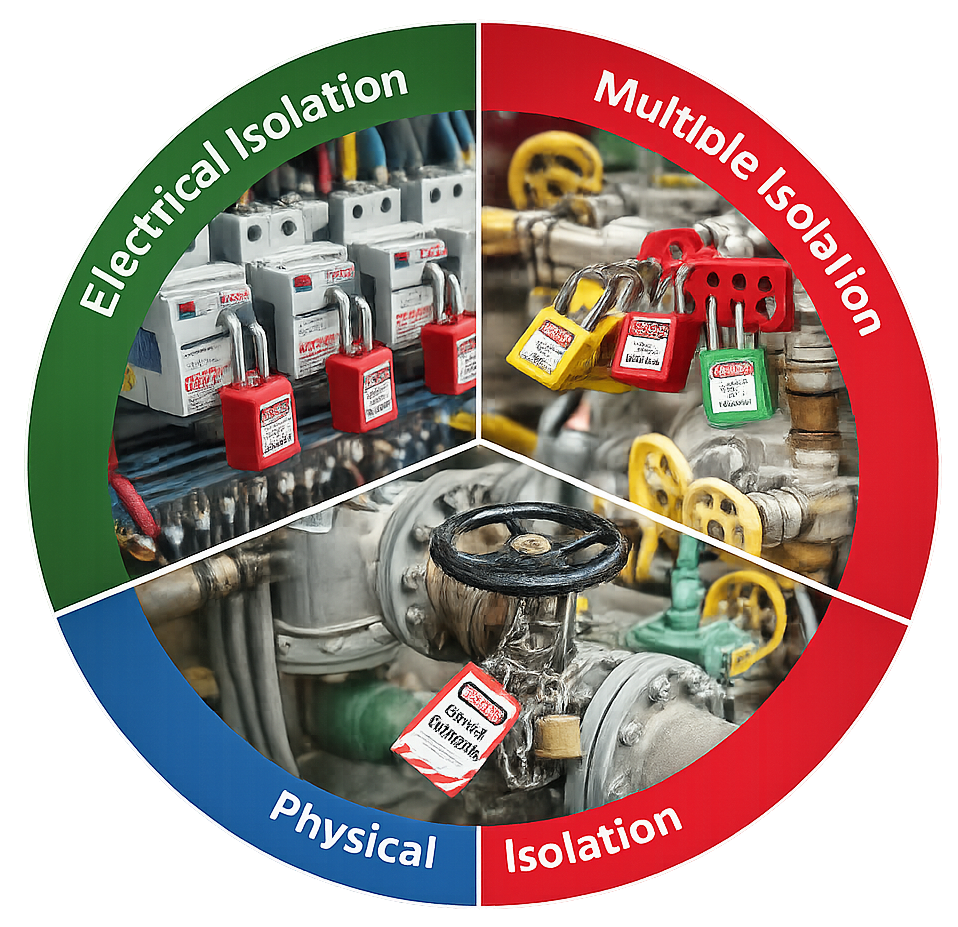
Lockout Tagout (LOTO) Control
Digitally manage Lockout Tagout (LOTO) procedures to ensure hazardous energy sources are safely isolated before maintenance or repair work begins. Record lock details, responsible personnel, verification status, and authorization within the permit workflow.
Physical Isolation
Manage physical isolation of equipment, pipelines, valves, and electrical systems to prevent the accidental release of hazardous energy. Verify all isolation points before permit approval to ensure a safe working environment.
Multiple Isolations
Associate multiple isolation points with a single work permit for complex maintenance activities involving multiple energy sources. Track and monitor each isolation independently to ensure complete safety and compliance.
Benefits of Digital Isolation & LOTO Management
✔ Improve control of hazardous energy sources
✔ Digitally manage Lockout Tagout procedures
✔ Reduce the risk of accidental equipment energization
✔ Ensure all required isolations are completed before work begins
✔ Integrate isolation verification with Permit to Work approvals
✔ Improve communication between operations and maintenance teams
✔ Maintain complete digital records and audit trails
✔ Strengthen compliance with organizational safety procedures and industry best practices
Risk Assessment Integration
Effective risk assessment is a critical step before issuing any safety permit. QHSEAlert Safety Permit Software seamlessly integrates Risk Assessment with the Permit to Work (PTW) process, ensuring that hazards are identified, risks are evaluated, and appropriate control measures are implemented before hazardous work begins.
By linking risk assessments directly to work permits, organizations can standardize safety procedures, improve decision-making, anda ensure that every permit is supported by documented hazard identification and mitigation measures. This integrated approach enhances workplace safety, strengthens compliance, and reduces the likelihood of incidents caused by uncontrolled risks.
Hazard Identification
Identify Hazards associated with each work activity, including physical, chemical, electrical, mechanical, environmental, and operational risks before issuing the permit.
Risk Evaluation
Assess the likelihood and severity of identified hazards using your organization’s Risk Evaluation methodology to determine the appropriate level of control required.
Control Measures
Define mandatory Control Measures such as PPE requirements, isolation procedures, gas testing, barricading, fire protection, ventilation, and safe work practices to reduce identified risks.
Hazard & Risk Library
Maintain a centralised Hazard & Risk Library of predefined hazards, risk ratings, and control measures to ensure faster, consistent, and standardized risk assessments.
Permit Approval Workflow
A well-defined Permit Approval Workflow is essential to ensure that hazardous work is reviewed, authorized, and monitored before any activity begins. QHSEAlert Safety Permit Software automates the approval process by routing permit requests through a configurable workflow, ensuring that every permit receives the necessary reviews and approvals based on your organization’s safety procedures.
Unlike paper-based systems, where approvals depend on physical signatures and manual coordination, digital workflows automatically notify the appropriate personnel, track approval status in real time, and maintain a complete audit trail of every decision. This helps reduce delays, improve accountability, and ensure that only authorized work is performed.
The approval workflow can be fully customized to match your organization’s hierarchy, permit type, department, project, location, or risk level.
Permit Request Submission
The applicant creates a digital permit by entering work details, selecting the permit type, identifying hazards, defining control measures, and attaching supporting documents. Mandatory fields ensure all required information is completed before submission.
Initial Supervisor Review
The immediate supervisor reviews the permit to verify the scope of work, confirm resource availability, and ensure that the work can proceed safely before forwarding it for further approvals.
Safety Review
The safety department verifies hazard identification, risk assessments, PPE requirements, isolation procedures, gas testing results, and other critical safety controls to ensure compliance with company safety procedures.
Area Authority Approval
The area or facility authority confirms that the work can be safely carried out in the specified location without conflicting with other ongoing operations or introducing additional operational risks.
Final Permit Approval
After all required reviews are completed, the authorized approver issues the permit electronically. The permit becomes active only after receiving all mandatory approvals, ensuring that work starts under controlled and approved conditions.
Real-Time Notifications
Throughout the approval process, automated notifications inform applicants, supervisors, safety personnel, contractors, and approvers about pending actions, approvals, rejections, permit expiry, and other important updates, helping reduce delays and improve communication.
Re-Approval for Changes
If permit details change after submission, authorized users can update the permit. The software automatically routes the modified permit through the required approval stages, ensuring that all changes are properly reviewed before work continues.
Approval Audit Trail
Every approval, rejection, comment, modification, digital signature, and timestamp is securely recorded within the system. This provides complete traceability for internal audits, incident investigations, regulatory inspections, and compliance reporting.
Benefits of a Digital Permit Approval Workflow
✔ Faster permit approvals with automated routing
✔ Configurable multi-level approval hierarchy
✔ Reduced paperwork and manual follow-up
✔ Improved accountability and transparency
✔ Real-time visibility of approval status
✔ Automatic notifications and reminders
✔ Better compliance with organizational safety procedures
Contractor Safety Management
Contractors play a vital role in maintenance, construction, shutdowns, and other high-risk activities, making effective Contractor Safety Management essential for workplace safety. QHSEAlert Safety Permit Software helps organizations manage contractor activities through a centralized digital platform that ensures only authorized and competent contractors are permitted to perform work.
By integrating contractor management with the Permit to Work (PTW) process, organizations can verify contractor qualifications, monitor permit status, maintain compliance, and improve coordination between contractors, supervisors, and safety teams.
Contractor Registration
Register and maintain contractor profiles with company details, contact information, licenses, and other essential records in a centralized database.
Contractor Competency Verification
Verify contractor qualifications, certifications, training records, and work authorizations before granting access to high-risk work activities.
Permit Authorization
Issue permits only to authorized contractors after completing the required approvals, risk assessments, and safety verifications.
Contractor Document Management
Store and manage contractor documents such as insurance certificates, licenses, safety training records, and statutory compliance documents digitally.
Contractor Access Control
Control contractor access to work locations by ensuring only approved personnel with valid permits can perform authorized activities.
Contractor Performance Monitoring
Track contractor permit history, safety compliance, work status, and performance to improve accountability and support informed decision-making.
Benefits of Contractor Safety Management
✔ Improve contractor safety compliance.
✔ Verify contractor competency before work begins.
✔ Digitally manage contractor permits and approvals.
✔ Centralize contractor documentation.
✔ Monitor contractor activities in real time.
✔ Enhance coordination between contractors and safety teams.
✔ Maintain complete audit trails and compliance records.
✔ Reduce administrative effort and paperwork.
Industries Using PTW Software
Safety Permit to Work (PTW) Software is widely used across industries where hazardous work activities require controlled authorization, risk assessment, and regulatory compliance. QHSEAlert Safety Permit Software helps organizations standardize permit management, improve workplace safety, and digitize approval workflows for high-risk operations.
Whether managing a single facility or multiple project sites, the software provides a centralized platform to create, approve, monitor, and close safety permits while ensuring compliance with organizational procedures and industry best practices.
Industries Using PTW Software
✔ Oil & Gas
✔ Construction
✔ Manufacturing
✔ Chemical & Petrochemical
✔ Mining
✔ Power & Utilities
✔ Cement Industry
✔ Pharmaceutical
✔ Food & Beverage
✔ Marine & Offshore
✔ Infrastructure & Utilities

Types of Safety Permits Supported
A comprehensive Safety Permit to Work (PTW) Software should support a wide range of permit types to effectively control hazardous work activities across different industries. Each permit is designed to identify workplace hazards, define necessary control measures, assign responsibilities, and ensure that work is carried out safely and in compliance with organizational procedures.
QHSEAlert Safety Permit Software enables organizations to digitally manage multiple permit types through configurable workflows, approval hierarchies, electronic signatures, real-time monitoring, and complete audit trails. Whether you require standard industry permits or customized permit formats, the system can be tailored to match your operational and regulatory requirements.
Hot Work Permit
Controls work activities involving open flames, welding, cutting, grinding, brazing, or any operation capable of generating heat, sparks, or ignition sources. The permit ensures that fire prevention measures, gas testing, firefighting equipment, and work area inspections are completed before work begins.
Confined Space Permit
Manages work inside enclosed spaces where hazardous atmospheres, oxygen deficiency, toxic gases, or restricted entry and exit may present serious risks. The permit verifies gas testing, ventilation, rescue, other preparedness before entry.
Electrical Work Permit
Controls maintenance, installation, testing, or repair activities involving electrical equipment and energized systems. The permit confirms electrical isolation, verification of de-energization, competency of personnel, PPE requirements, and safe work practices.
LOTO Permit
Ensures hazardous energy sources are properly isolated before maintenance or servicing activities begin. The permit documents lockout devices, isolation points, responsible personnel, and verification procedures to prevent accidental energization.
Excavation Permit
Authorizes excavation, trenching, drilling, and earthmoving activities. It helps verify underground utilities, soil stability, excavation protection, access arrangements, and emergency response requirements before excavation work starts.
Height Work Permit
Controls activities performed above ground level where there is a risk of falling. The permit confirms fall protection systems, scaffolding inspections, ladder safety, anchor points, rescue planning, and worker competency.
Cold Work Permit
Authorizes maintenance and repair activities that do not generate flames or ignition sources but still require safety controls due to operational or environmental hazards.
Lifting Permit
Manages crane operations, heavy lifting, and material handling activities. The permit ensures lifting plans, equipment inspections, load calculations, operator competency, communication methods, and exclusion zones are established.
Radiography Permit
Controls industrial radiography activities involving radioactive sources or X-ray equipment. The permit verifies radiation safety controls, exclusion zones, warning systems, monitoring devices, and regulatory compliance.
Line Breaking Permit
Authorizes the opening of pipelines, vessels, or process equipment containing hazardous liquids, gases, steam, or chemicals. The permit confirms depressurization, isolation, drainage, PPE requirements, and emergency preparedness.
Custom Permit Types
Not every organization uses the same permit types or approval processes. QHSEAlert Safety Permit Software enables you to create unlimited custom permit types that match your organization’s specific operational, safety, and compliance requirements. Design customized permit forms, define approval workflows, configure mandatory fields, add safety checklists, assign approvers, and implement validation rules without changing your existing business processes. Whether you require permits for specialized maintenance, laboratory work, pressure testing, confined operations, or client-specific activities, the system provides the flexibility to digitize and manage every permit efficiently from a single platform.
How Safety Permit Software Works
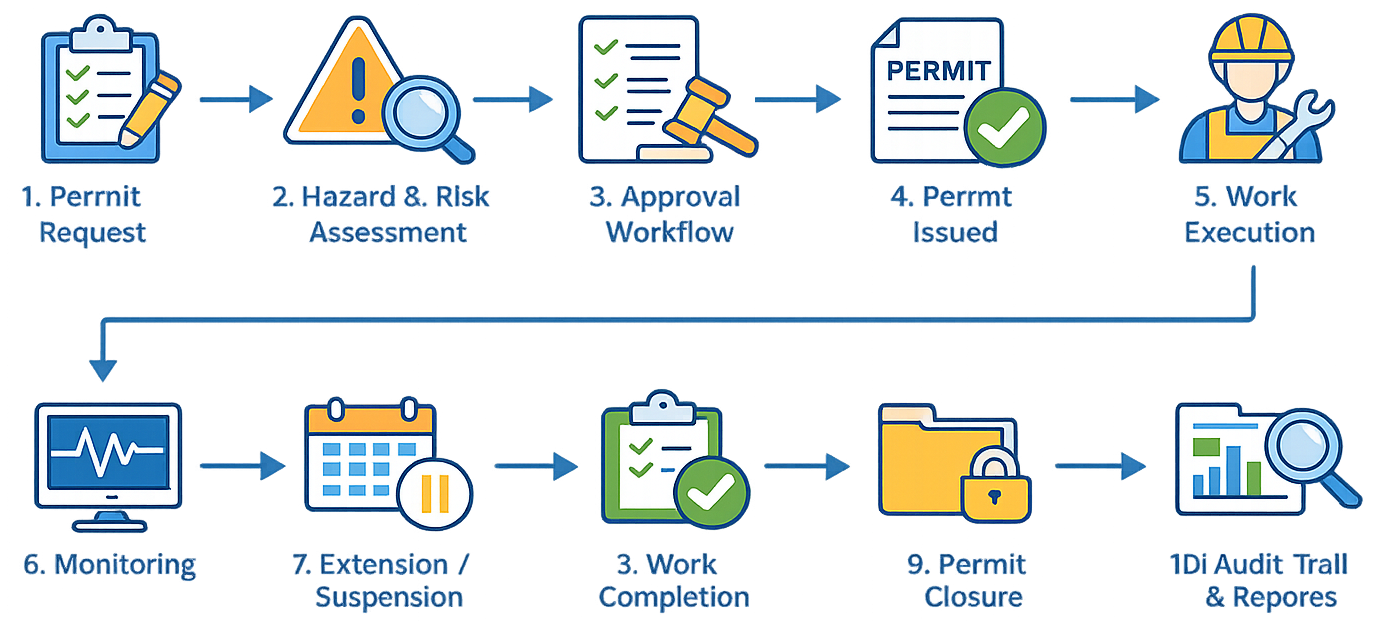
Safety Permit to Work (PTW) Software simplifies and standardizes the entire permit management process by replacing paper-based approvals with a secure digital workflow. From permit request to final closure, every stage is tracked electronically to ensure that hazardous work is properly reviewed, authorized, monitored, and documented.
With QHSEAlert Safety Permit Software, organizations can configure their own permit workflow to match company procedures, approval hierarchies, and safety requirements. This ensures consistency, improves communication, reduces manual errors, and provides complete visibility into every permit throughout its lifecycle.
Step 1 – Raise a Permit Request
The permit applicant creates a new digital permit by selecting the required permit type, work location, work description, contractor or employee details, planned start and end time, and other relevant information. Mandatory fields ensure that incomplete permits cannot be submitted.
Step 2 – Identify Hazards & Controls
Potential hazards associated with the work are identified, and appropriate control measures are defined. Safety checklists, PPE requirements, gas testing results, isolation requirements, and supporting documents can be attached to ensure all risks are addressed before work begins.
Step 3 – Review & Multiple Approvals
The permit is automatically routed through the configured approval workflow. Supervisors, area authorities, safety officers, maintenance managers, or other authorized personnel can review the permit, request corrections, approve, or reject it based on company procedures.
Step 4+5 – Issue Permit & Execution
Once all required approvals have been completed, the permit is officially issued and becomes active. Workers and contractors can access permit details, safety instructions, and approval status through the system, ensuring that only authorized work is performed.
Step 6 – Monitor Work Activities
During execution, supervisors and safety teams can monitor the status of active permits in real time. The software provides visibility into ongoing work, permit validity, pending approvals, and work progress through centralized dashboards and notifications.
Step 7 – Permit Extension or Suspension
If work cannot be completed within the approved duration, authorized personnel can extend the permit after reviewing site conditions and confirming that safety controls remain effective. If unsafe conditions arise, permits can be suspended until corrective actions are completed.
Step 8+9 – Work Completion & Closure
After the work is completed, the responsible personnel verify that the job has been safely finished, the work area has been restored, tools and equipment have been removed, and all safety requirements have been satisfied. The permit is then digitally closed and archived for future reference.
Step 10 – Audit Trail and Reporting
Every action performed within the permit lifecycle—including permit creation, modifications, approvals, rejections, extensions, suspensions, and closure—is automatically recorded with user details and timestamps. This complete audit trail simplifies investigations, internal audits, compliance verification, and management reporting.
QHSEAlert Safety Permit Software streamlines the entire Digital Permit Approval process by automatically routing permits to the appropriate reviewers based on predefined workflows. The Electronic Permit Workflow eliminates manual paperwork and physical signatures while ensuring that every approval is recorded securely. Organizations can configure a Multi-Level Approval Workflow that aligns with their operational hierarchy, allowing supervisors, safety officers, area authorities, and management to review and authorize permits in the correct sequence. This structured Permit Authorization Process improves accountability, reduces approval delays, and ensures that hazardous work cannot begin until all mandatory approvals have been completed. By implementing a Digital PTW Approval System, organizations gain real-time visibility into permit status, automated notifications for pending approvals, and a complete audit trail that supports regulatory compliance and workplace safety.
Key Features of Permit to Work Software
QHSEAlert Safety Permit to Work (PTW) Software provides a comprehensive set of features to digitize and streamline the entire permit management process. From permit creation and multi-level approvals to risk assessments, isolation management, mobile access, and real-time reporting, the software helps organizations improve workplace safety, strengthen compliance, and efficiently manage high-risk work activities. Designed for organizations of all sizes, the platform is fully configurable to match your operational workflows and safety procedures.
Multiple Permit Types
Manage Hot Work, Confined Space Entry, Electrical Work, LOTO, Excavation, Work at Height, Cold Work, Lifting, and custom permit types from one platform.
Configurable Workflow
Configure multi-level approval workflows based on permit type, department, project, location, or organizational hierarchy.
Risk Assessment Integration
Link risk assessments, JSA/JHA, hazards, and control measures directly with every work permit.
Isolation Management
Manage energy isolation, Lockout Tagout (LOTO), physical isolations, and verification processes within the permit workflow.
Unlimited Users
Add unlimited users without worrying about user-based licensing, making it easy to scale as your organization grows.
Mobile Permit to Work
Create, review, approve, verify, and close permits using smartphones or tablets from anywhere.
Real-Time Dashboard
Monitor active permits, pending approvals, expired permits, contractor activities, and safety KPIs through live dashboards.
Notifications & Alerts
Receive automatic notifications for pending approvals, permit expiry, work completion, overdue actions, and critical safety events.
Reports & Analytics
Effective reporting and analytics are essential for monitoring the performance of your Permit to Work (PTW) system and improving workplace safety. QHSEAlert Safety Permit Software provides real-time dashboards, interactive reports, and comprehensive analytics that give organizations complete visibility into permit activities, approval status, compliance, and operational performance.
With centralized reporting, safety managers and decision-makers can track key performance indicators (KPIs), identify bottlenecks, monitor permit trends, and generate actionable insights to continuously improve safety and operational efficiency.
Real Time Dashboard
Monitor active, pending, approved, suspended, and closed permits through a centralized dashboard. Gain instant visibility into permit status, approvals, and ongoing work activities.
Permit Status Report
Generate detailed reports on permit requests, approvals, rejections, expiry, and completion status. Track every permit throughout its lifecycle for better operational control.
Area-wsie Permit Data
Analyze permit activities across different plants, departments, projects, or work locations. Identify high-risk areas, workload distribution, and safety performance by location.
Contractor Performance Report
Evaluate contractor performance by monitoring permits issued, compliance, work completion, and safety records. Improve contractor accountability and support informed decision-making.
Toolbox Talk Report
Maintain digital records of toolbox talks, attendance, training topics, and participant acknowledgements. Track safety awareness activities and demonstrate compliance during audits.
Non-Compliance Report
Identify permit violations, overdue approvals, expired permits, and safety non-conformities through comprehensive reports. Take timely corrective actions to improve compliance and workplace safety.
Mobile Permit to Work
Modern workplaces require flexibility and real-time access to safety information. QHSEAlert Mobile Permit to Work enables employees, supervisors, safety officers, and contractors to create, review, approve, monitor, and close permits directly from their smartphones or tablets. Whether working in a plant, construction site, refinery, mine, or offshore facility, users can manage permits anytime and anywhere without depending on paper forms or desktop computers.
The mobile solution improves communication, accelerates approvals, and provides instant access to permit information, ensuring high-risk work is carried out safely and efficiently.
Create-Approve-Verify on Mobile
Create, review, approve, and verify work permits directly from your smartphone or tablet with a secure digital workflow. Enable faster decision-making, reduce delays, and keep permit processes moving.
Photo & Document Upload
Capture site photographs and upload documents directly from your mobile device to support inspections, permit verification, and compliance.
Real-Time Notifications
Receive instant notifications for new permit requests, pending approvals, permit expiry, and work completion to stay informed at all times.
✔ Faster permit creation and approvals
✔ Real-time communication between teams
✔ Instant notifications and alerts
✔ Paperless workflows
✔ Easy photo and document capture
✔ Improved field productivity
✔ Better visibility into permit status
✔ Enhanced safety compliance
Implementation & Support
Successful adoption of a Digital Permit to Work (ePTW) Software depends on a smooth implementation process and reliable ongoing support. QHSEAlert Safety Permit Software is designed to be implemented efficiently while aligning with your organization’s existing safety procedures, approval workflows, and operational requirements.
Our team works closely with customers to configure permit types, approval hierarchies, user roles, notifications, and business rules so the system reflects the way your organization operates. From initial setup to user training and post-deployment assistance, we help ensure a successful transition from paper-based permits to a fully digital PTW process.
System Configuration
Configure permit templates, approval workflows, user permissions, checklists, notifications, and custom business rules to match your organization’s Permit to Work procedures.
User Training
Provide training for administrators, supervisors, safety officers, employees, and contractors to ensure confident and effective use of the system.
Go-Live Support
Receive assistance during deployment to help users adapt quickly and ensure permit operations continue smoothly from day one.
Technical Support
Access dedicated technical support for troubleshooting, guidance, and assistance with system-related questions and operational issues.
Remote & Online Assistance
Get support through remote sessions, online meetings, email, and other digital communication channels for faster issue resolution.
Software Updates
Benefit from ongoing improvements, feature enhancements, and updates that help keep your PTW system aligned with evolving business and safety requirements.
Book a Demo / Contact Us
Experience how QHSEAlert Safety Permit Software can transform your Permit to Work (PTW) process with a personalized live demonstration. Our experts will understand your business requirements, showcase the features most relevant to your operations, and explain how the software can improve workplace safety, streamline permit approvals, and strengthen compliance.
Whether you’re looking to replace a paper-based permit system or upgrade your existing digital solution, we’re here to help you find the right fit for your organization.
Frequently Asked Questions (FAQs)
Find answers to the most common questions about Safety Permit to Work (PTW) Software, including features, implementation, industries, mobile access, compliance, and pricing. These FAQs help organizations understand how digital permit management improves workplace safety, operational efficiency, and regulatory compliance.
What is Safety Permit to Work (PTW) Software?
Safety Permit to Work (PTW) Software is a digital solution that helps organizations create, approve, issue, monitor, and close work permits electronically. It replaces paper-based permit systems with automated workflows, improving workplace safety, compliance, and operational efficiency.
Can the software be customized?
Yes. QHSEAlert Safety Permit Software allows you to configure permit templates, approval workflows, user roles, checklists, mandatory fields, notifications, and custom permit types to match your company’s procedures.
Does the software support mobile devices?
Yes. Users can create, review, approve, verify, and close permits using smartphones or tablets, allowing faster decision-making and improved collaboration from any work location.
Can I generate reports and dashboards?
Yes. The software provides real-time dashboards, permit status reports, contractor performance reports, compliance reports, and toolbox talk reports, to support informed decision-making.
Is there a limit on the number of users?
No. QHSEAlert Safety Permit Software supports unlimited users, allowing organizations to add employees, contractors, supervisors, and administrators without user-based restrictions.
Which types of safety permits are supported?
The software supports multiple permit types, including Hot Work, Confined Space Entry, Electrical Work, Lockout Tagout (LOTO), Excavation, Work at Height, Cold Work, Lifting, and fully customizable permit types based on your organization’s requirements.
Can contractors use the software?
Yes. The organization can decide to extend the usage of the software to contractors with limited access that can be configured.
Does the software support Risk Assessment and LOTO?
Yes. The software integrates Risk Assessment, Hazard Identification, Isolation Management, and Lockout Tagout (LOTO) with the permit workflow to ensure all safety controls are completed before work begins.
Which industries use Safety Permit Software?
The software is widely used in Oil & Gas, Construction, Manufacturing, Chemical & Petrochemical, Mining, Power & Utilities, Cement, Pharmaceutical, Food & Beverage, Marine & Offshore, and other industries managing high-risk work.
How can I request a demo?
You can contact our team to schedule a personalized product demonstration. We’ll help you understand how QHSEAlert Safety Permit Software can be configured to meet your organization’s specific safety and operational requirements.
Paper-based Permit vs QHSEAlert Safety Permit Software
Many organizations still rely on paper-based Permit to Work (PTW) systems to manage high-risk work activities. While paper permits may seem simple, they often result in approval delays, misplaced documents, poor visibility, and compliance challenges. Digital Safety Permit Software transforms the entire permit process by automating workflows, improving communication, and providing complete visibility from permit creation to closure.
By replacing manual paperwork with a centralized digital platform, organizations can improve workplace safety, increase operational efficiency, and maintain accurate records for audits and regulatory inspections.
| FEATURE | PAPER-BASED PERMIT SYSTEM | QHSEAlert DIGITAL PERMIT SYSTEM |
|---|---|---|
| Permit Creation | Manual paper forms | Digital permit creation with predefined templates |
| Approval Process | Physical signatures and manual follow-up | Automated multi-level approval workflow |
| Permit Status | Difficult to track | Real-time permit status and dashboards |
| Document Storage | Paper files and physical archives | Secure cloud-based digital records |
| Risk Assessment | Separate paper documents | Integrated risk assessment with permits |
| LOTO & Isolation | Manual verification | Digital isolation and LOTO management |
| Notifications | Phone calls and emails | Automatic alerts and reminders |
| Mobile Access | Not available | Create, approve, and verify permits on mobile |
| Audit Trail | Limited or incomplete | Complete digital audit trail with timestamps |
| Reporting | Manual compilation | Instant reports and analytics |
| Compliance | Difficult to demonstrate | Audit-ready digital records |
| Contractor Management | Manual tracking | Centralized contractor management |
| Data Search | Time-consuming | Search permits instantly |
| Scalability | Difficult for multiple sites | Supports single or multiple locations |
| Paper Usage | High | Completely paperless |
QHSEAlert Safety Permit Software - Information
Software Information
| ATTRIBUTE | DETAILS |
|---|---|
| Software Name | QHSEAlert Safety Permit Software |
| Category | Permit to Work (PTW) Software |
| Software Type | Cloud-Based (SaaS) |
| Deployment | Web-Based Application |
| Primary Purpose | Digital Permit to Work Management |
| Mobile Access | Yes |
| Paperless Workflow | Yes |
| Unlimited Users | Yes |
| Unlimited Permits | Yes |
| Custom Permit Types | Yes |
| Approval Workflow | Configurable Multi-Level Workflow |
| Audit Trail | Complete Digital Audit Trail |
| Real-Time Dashboard | Yes |
| Reports & Analytics | Yes |
| Contractor Management | Yes |
| Risk Assessment Integration | Yes |
| Isolation & LOTO Management | Yes |
| Photo & Document Attachments | Yes |
| Role-Based Access Control | Yes |
| Multi-Site Support | Yes |
| Industry Support | Multiple Industries |
Security & Data Privacy
✔ SSL Encryption
✔ Auto Backup (Daily/ Weekly)
✔ Audit Trail
✔ Role Based Access
✔ Two Factor Authentication
✔ Password Policy
✔ Secure Cloud Hosting
✔ Singal Sign On (SSO)

QHSE Digital Solutions